English
 Chinese
Scan QRCode

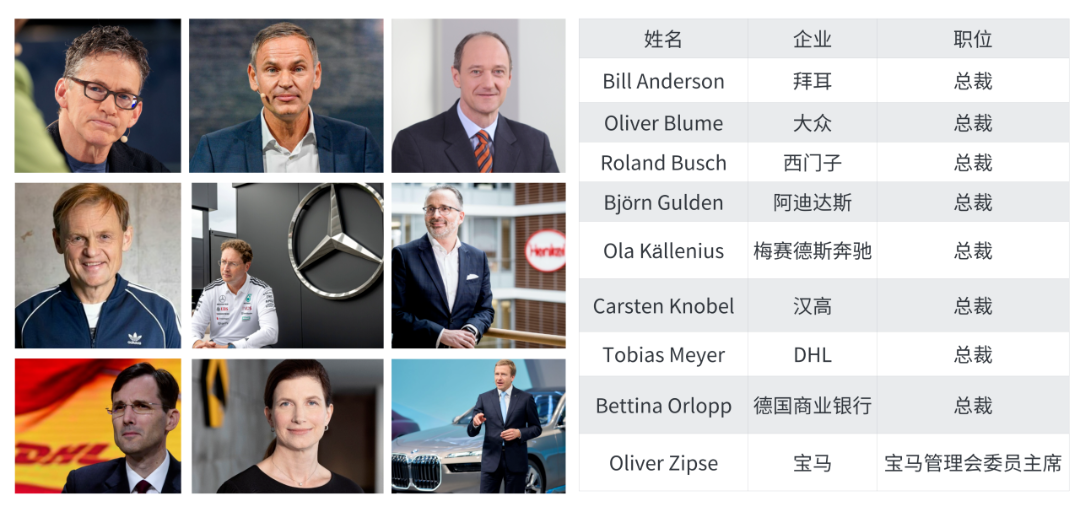
At the beginning of 2026, German Chancellor Mertz visited China with the global leaders of Volkswagen, Mercedes Benz, and BMW, as well as more than 30 executives from core German companies. This highly anticipated diplomatic interaction between China and Europe has already gone beyond the simple bilateral economic and trade scope. As the world's second and third largest economies, the deep dialogue between China and Germany affects the international political and economic landscape; For the automotive industry, the attendance of all three German giants, the intensive signing of contracts between Chinese and German car companies, and in-depth discussions between government and enterprise executives have written a clear footnote to this game: although Sino German cooperation is a win-win situation, from the perspective of industry reality and economic data, German cars and even the German economy have already formed a deeper dependence on China.
In other words, this visit to China is not so much about Germany seeking economic and trade "balance" in China, but rather a reversal of the image of Germany and German cars having to bow down to the Chinese market and Chinese technology in the wave of electrification and global restructuring. During M ö tz's visit to China, the automotive industry has undoubtedly become the core topic and lever of Sino German cooperation. From the substantive agreements that have been implemented to the core content of government enterprise discussions, it marks a new stage of cooperation between the Chinese and German automotive industries, from the past "market for technology" to "two-way technology co creation". Behind every cooperation is the urgent demand of German car companies for Chinese technology and supply chain. BMW and CATL signed a memorandum of understanding on cross-border industrial data usage, seemingly focusing on data governance, but in fact, it is a key step for BMW to stabilize its electrification supply chain.
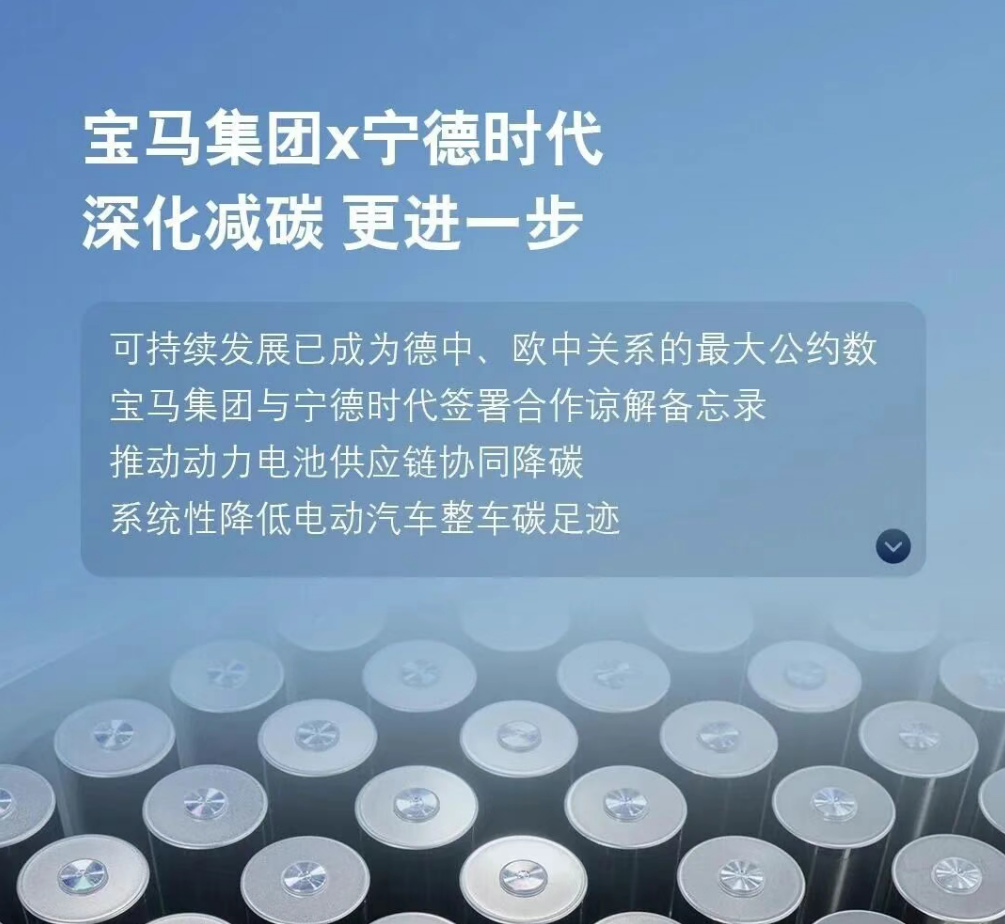
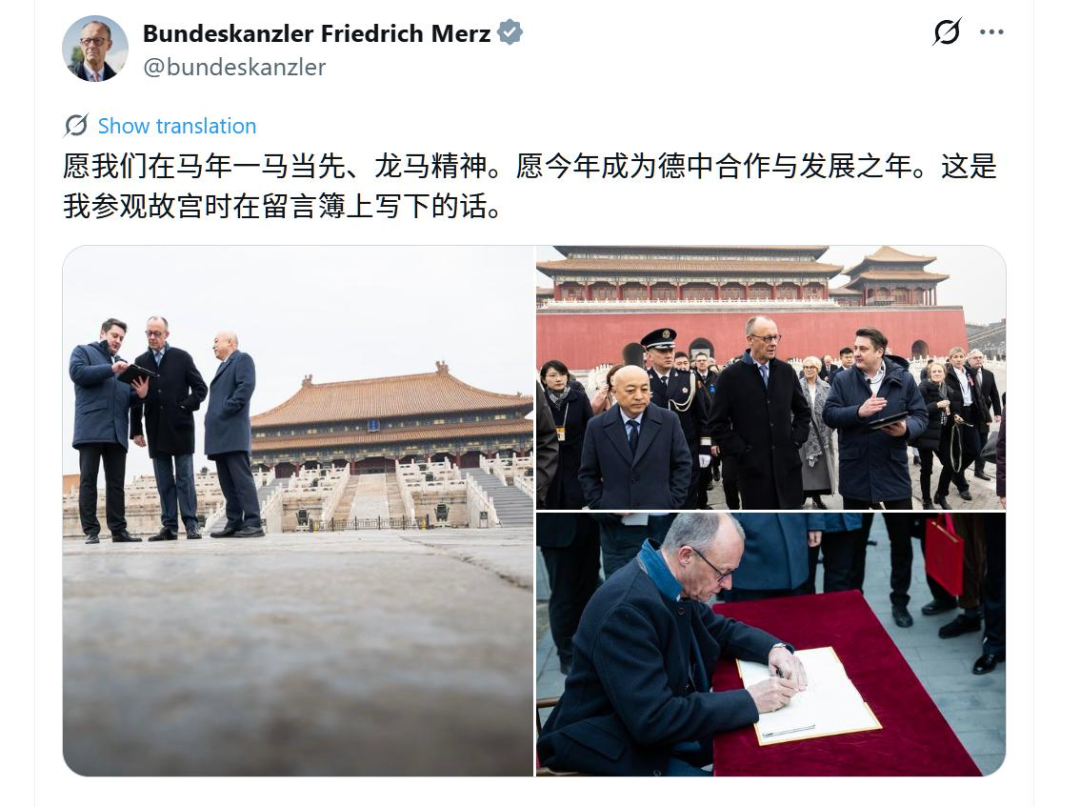
In the field of batteries, CATL has a global market share of over 35%, with core technologies such as solid-state batteries leading the world. BMW Shenyang Power Battery Center is highly dependent on CATL for mass production and new generation vehicle battery supply. This consensus not only solves the core pain points of BMW's localization operation, but also confirms China's rule discourse power in the field of data governance, upgrading Sino German cooperation from simple "product supply" to deep "rule co construction". Mercedes Benz signed an upgraded strategic cooperation memorandum of understanding with Momenta, and Mertz personally visited the Mercedes Benz factory in Beijing and test drove the new generation Mercedes Benz S-Class, experiencing China's intelligent driving technology and capabilities, marking that Sino German automotive has pushed technology cooperation to the practical level. At the symposium of the China Germany Economic Advisory Committee on the 25th, more than 60 Chinese and German entrepreneurs had in-depth exchanges on electrification, green manufacturing, localized supply chain, and research and development cooperation. Chinese car companies such as Geely, Xiaomi, and NIO had direct dialogues with German giants, and the relevant consensus was finally included in the package of cooperation documents after the China Germany Prime Minister's meeting, elevating China Germany automotive cooperation from the enterprise level to the national strategic level.
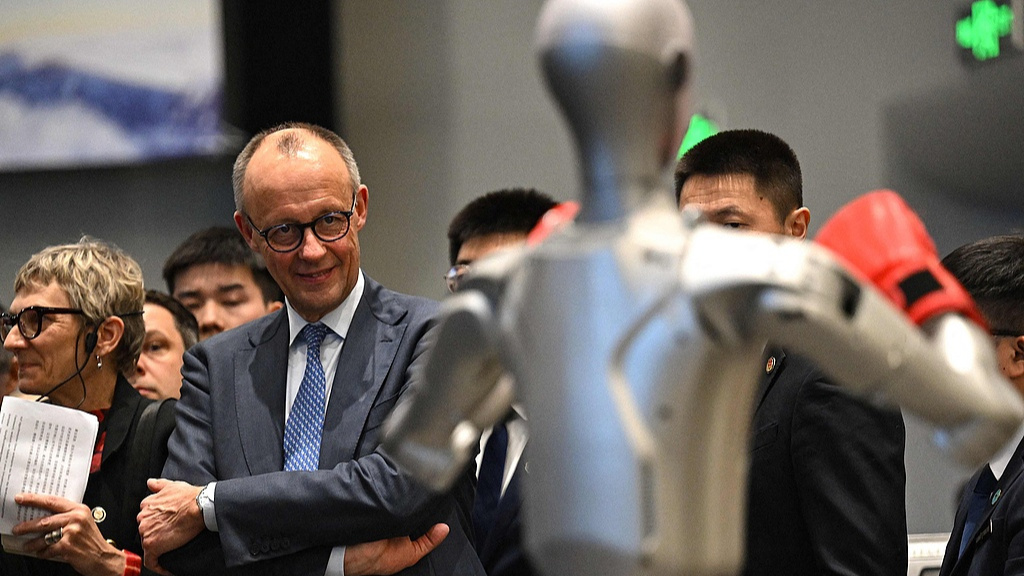
The delegation in Hangzhou not only visited the popular Yushu Technology, but also exchanged ideas with Hangzhou entrepreneurs where Geely and Zero Run are located. This can be seen as Germany's recognition and recognition of the strength of China's local new energy vehicle companies, demonstrating the hard power of China's new energy vehicle industry. Behind a series of actions is a fundamental change in the underlying logic of Sino German automotive cooperation: in the past, German car companies entered China with core technologies, traded technology for the market, and dominated the industry; Nowadays, China has formed an unshakable structural advantage in areas such as electrification, intelligence, and batteries. German car companies not only need China's technology and complete supply chain to reduce transformation costs, but also need China, the world's largest automotive market, to maintain their profitability and development foundation. Undoubtedly, the cooperation between China and Germany in the automotive industry has a two-way nature, and China also needs to leverage its cooperation with Germany to further open up the European market and achieve global output of technology and brands. However, this demand is fundamentally different from Germany's deep dependence on China. When Mertz shouted "establish a balanced partnership" before his visit to China and the German government attempted to create a tough stance of "not relying on China", the actual actions of German companies and cold economic data had already shattered this illusion of "balance". Germany's one-way dependence on China had already been engraved in the bones of industry and economy.
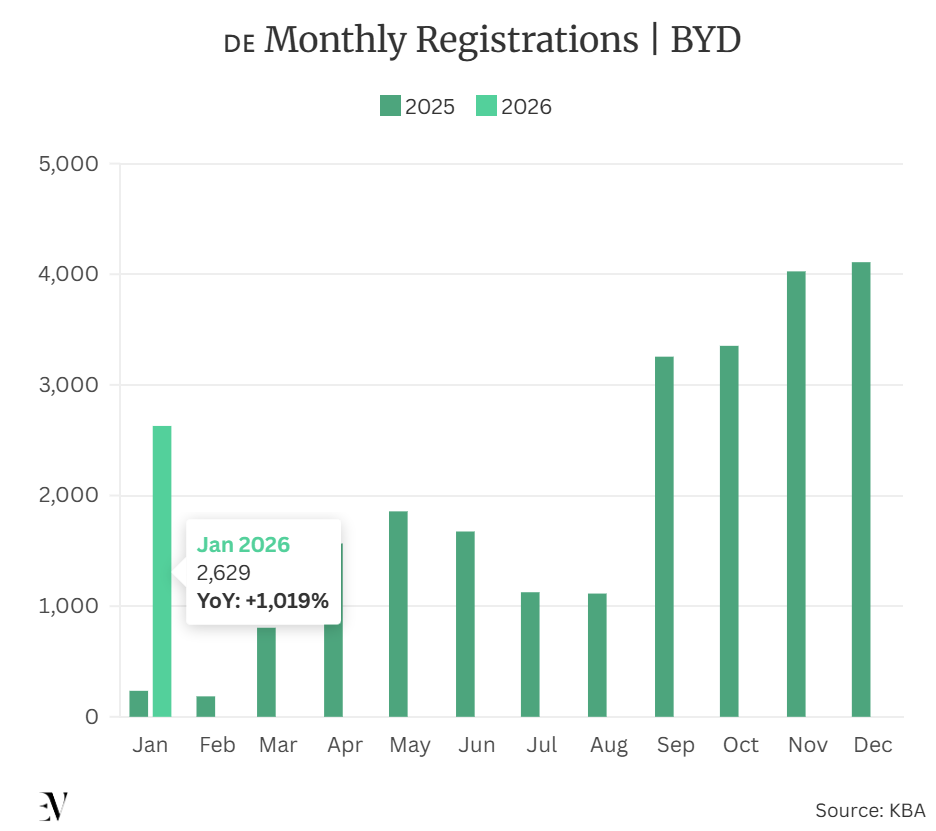
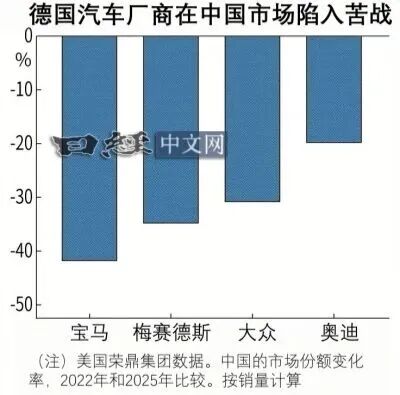
From the perspective of trade data alone, China has already become Germany's irreplaceable largest trading partner. By 2025, the trade volume between China and Germany will reach 251.8 billion euros, with China once again surpassing the United States to reach the top. Among them, Germany imported 1706 billion euros from China, but exported only 81.8 billion euros to China, with imports more than twice as much as exports. The trade deficit with China is nearly 90 billion euros, which means that the demand for Chinese goods in the German market is much greater than the demand for German goods in the Chinese market. In the automotive sector, which accounts for 13% of Germany's industrial employment and 17% of its exports and is known as the "lifeblood of German industry," this deficit is even more significant: Chinese electric vehicles, batteries, and smart components continue to flood the German market, while German car companies' sales in China continue to decline, export growth to China is weak, and the tilted trade pattern has long predetermined Germany's passive position in Sino German economic and trade relations. Objective data intuitively confirms the reversal of this industrial pattern. From 2022 to 2025, the average market share of German car companies in China will decrease by 33%, with BMW decreasing by 42% and Mercedes Benz by 35%. The traditional advantages of German brands in China continue to shrink. On the other hand, Chinese brands are not only squeezing German cars in the Chinese market, but also making great strides in the German domestic market. BYD will deliver 23306 electric vehicles in Germany by 2025, a year-on-year increase of 706.2%. In January 2026, sales will surge by more than 1000%. It also plans to have over 350 dealerships in Deb by the end of the year, aiming to achieve an annual sales target of 50000 vehicles. The comparison of competitiveness between the Chinese and German automotive industries has become clear between a decline and a rise.
The global layout choices of German car companies further confirm their deep dependence on the Chinese market. While closing factories and reducing production capacity in Germany, we are also investing heavily in localizing our operations in China. Volkswagen has invested over 20 billion euros in the Hefei base and invested in Xiaopeng, BMW has invested over 10 billion euros in building a power battery center in Shenyang, and Mercedes Benz continues to increase its localization of electric vehicle research and development in China. The actions of the three German giants are highly consistent, simply because they deeply understand that 'only by succeeding in China can we succeed in other markets'. As BMW Group Chairman Zipser said, ignoring the Chinese market is equivalent to missing out on major opportunities for global growth and economic success. Undoubtedly, the choices of enterprises are always more genuine than the statements of the government. Although the German government wants to maintain a certain degree of "political dignity", by 2025, Germany's direct investment in China will increase by 7.5 billion euros, a year-on-year increase of 70%, reaching a new high in nearly five years. German enterprises have voted with real money, demonstrating their firm confidence in the Chinese market. The disconnect of "the government wants to be tough, but companies dare not be tough" is the biggest weakness of the Merz government, and it also confirms a fact: the German government's strategy towards China cannot withstand the choices of the market or the deep dependence of German companies on the Chinese market and technology.
Looking at China's demand for Germany again, it can be seen as a "borrowing" rather than a "dependence", let alone a passive dependence on industrial development. The continued tension in Sino US relations has made Europe an important blue ocean for China's automobile exports, and Germany, as the largest economy in Europe, is a "bridgehead" for Chinese brands to enter the high-end European market. In 2023, China will surpass Japan to become the world's largest automobile exporter. By 2025, China's monthly sales of electric vehicles in Europe will exceed 100000 units, with a market share of 9.5% and a year-on-year growth rate of 127%. Europe has already become the core market for China's automobile globalization. Obviously, the cooperation between China and Germany can clear many obstacles for Chinese brands to go global in Europe. For example, the promotion of mutual recognition of automotive standards between China and Germany has enabled brands such as BYD, Geely, and NIO to better comply with European technology and environmental regulations; For example, Germany's advantages in green manufacturing, carbon footprint management, and automotive grade chips can also fill some of the gaps in China's automotive industry, achieving complementary advantages between the two sides. At the same time, the internal competition in the domestic new energy vehicle market has forced Chinese brands to seek incremental growth. As a global high-end automotive market, Europe can not only bring sales growth, but also enhance the international premium and influence of Chinese brands. But all of this is the globalization advancement sought by the Chinese automotive industry on the basis of having structural advantages. From the perspective of various official media outlets, Mertz's visit to China has basically set the tone of "two-way co creation and deep binding" for the cooperation between China and Germany in the automotive industry, and will also promote the cooperation between the two sides to a deeper level. In the future, German car companies will accelerate their localization layout in China. In 2026, nine new Mercedes Benz cars will be equipped with Chinese intelligent driving and BMW's new generation models will be launched in China. The electrification transformation of German car companies will increasingly rely on Chinese technology and market; Chinese brands will also leverage the cooperation between China and Germany to further cultivate the European market and accelerate the pace of globalization.
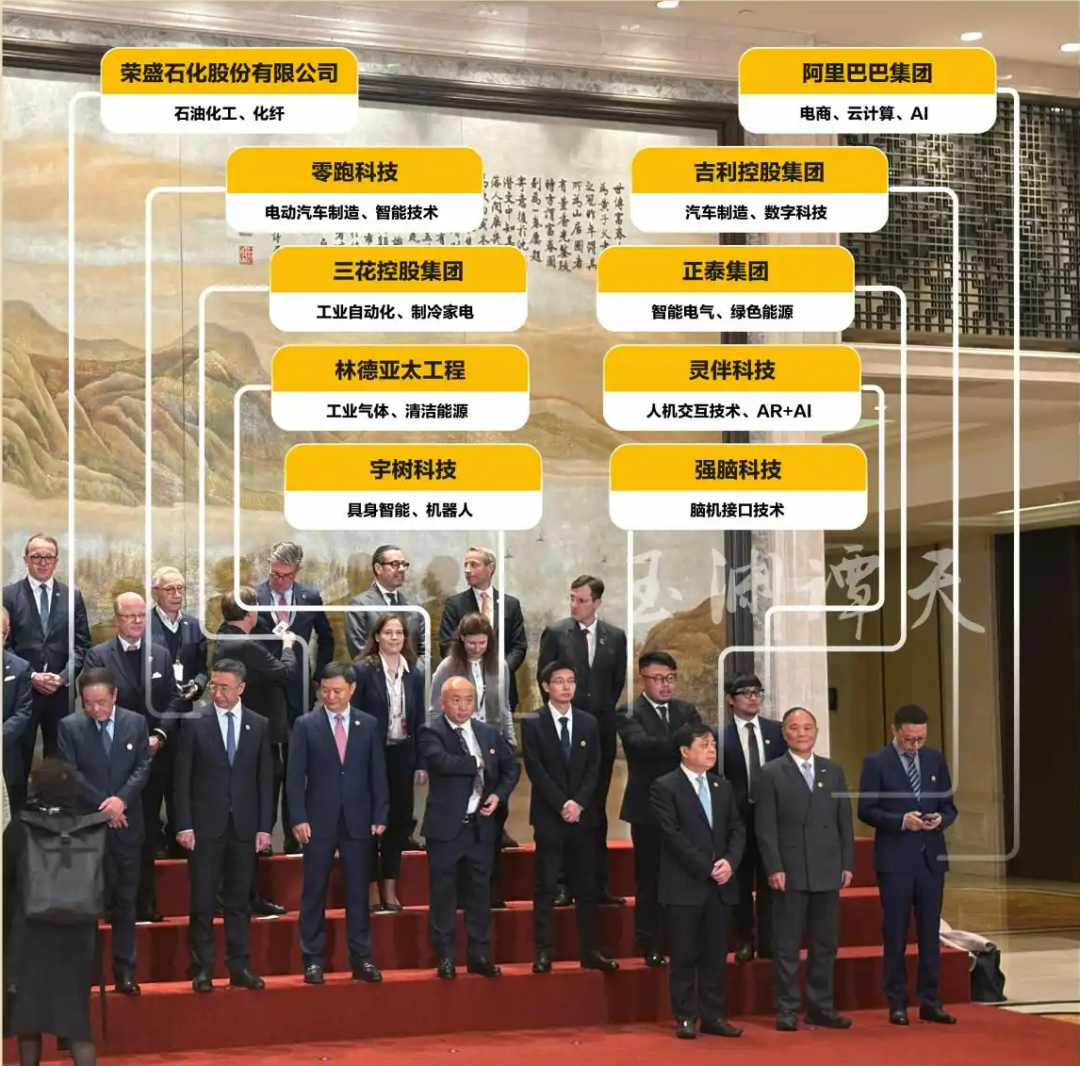
But it cannot be denied that behind this cooperation, the dominant power of the Sino German automotive industry has already quietly tilted towards China. The structural advantages formed by China in the fields of electrification, intelligence, and batteries, as well as its complete supply chain, economies of scale, and technological barriers, have forced German car companies to actively approach them; The huge market size in China has become the core confidence for German car companies to transform into electric vehicles; What Germany can provide to China is more access to the European market, some high-end manufacturing experience, and automotive grade chips and other components. The scale of cooperation chips has already tilted towards China. The deep dependence of German cars and even the German economy on the Chinese market and technology is not accidental, but an inevitable result of the wave of electrification, the restructuring of the global industrial landscape, and the best proof of the rise of China's automotive industry. China's equal voice and even leadership in Sino German cooperation stem from its solid industrial strength. Perhaps as the title of an article in the German media "Business Daily" suggests, 《Bundeskanzler Merz darf in China alles machen, nur keinen Kotau》, Implied meaning: Premier, you can do anything in China, but we must not kneel down! However, in terms of the reality of German cars alone, they have already lowered their heads.
AMS2024 Exhibition Guide | Comprehensive Exhibition Guide, Don't Miss the Exciting Events Online and Offline
Notice on Holding the Rui'an Promotion Conference for the 2025 China (Rui'an) International Automobile and Motorcycle Parts Exhibition
On September 5th, we invite you to join us at the Wenzhou Auto Parts Exhibition on a journey to trace the origin of the Auto Parts City, as per the invitation from the purchaser!
Hot Booking | AAPEX 2024- Professional Exhibition Channel for Entering the North American Auto Parts Market
The wind is just right, Qianchuan Hui! Looking forward to working with you at the 2024 Wenzhou Auto Parts Exhibition and composing a new chapter!
Live up to Shaohua | Wenzhou Auto Parts Exhibition, these wonderful moments are worth remembering!
Free support line!
Email Support!
Working Days/Hours!



Copyright © 2018, PKT Auto Parts All Rights Reserved
浙ICP备18033565号-1
 浙公网安备33038102332475号