English
 Chinese
Scan QRCode

Recently, "shared auto repair workstations" have been reintroduced in the aftermarket, and there have been many discussions about it. On social media platforms, many car service store owners are renting out their workstations and clearly stating prices, such as 20 yuan per hour or a maximum of 300 yuan. Some bloggers also visited the shops and learned that some auto repair shops have started to vigorously implement the "shared auto repair workstations" model, and the business is doing well. In fact, the sharing of auto repair workstations is not a new phenomenon in the industry. Some practitioners recalled, 'Shanghai had it 10 years ago.'. From its lukewarm development trajectory, it is not a popular gameplay in the industry. Until this year, this "sharing trend" quietly spread, from individuals to 4S stores, and bosses were very interested in "renting out" idle workstations. Why this year? Because business is too difficult to do! In the first four months of this year, most of the car service stores experienced a sharp decline in performance, with a cliff like drop in store entry volume. The anxiety of the owners almost flooded the video screen. The sharing of auto repair workstations is a new attempt. In the past, it was an "increment" that bosses tried to innovate, but now it is a "cost reduction" method forced by the market. The logic is simple and straightforward. Instead of leaving workstations empty and waiting for death, it is better to sell them by the hour or day. Is this attempt to 'compress costs to the extreme' a temporary solution in the cold winter of the industry, or a life-saving remedy?
01. The repair shop and 4S are both sharing
AC Auto has compiled rental information on social media platforms in recent months, and it can be seen that there are currently two main forms of "shared auto repair workstations". One is to rent out to car owners: for example, a car repair shop in Sichuan offers car owners a price of 20 yuan per hour or 150 yuan per day; The charging standard for auto repair shops in Guangdong is 35 yuan per hour, with a maximum of 300 yuan per day.
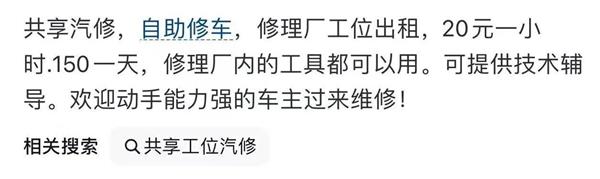
Simply put, car owners can bring their own accessories for repairs, while auto repair shops provide space, lifts, repair tools, utilities, etc., which can not only utilize idle workstations but also sell accessories to car owners. From the perspective of auto repair shops, most car owners who are willing to do their own maintenance are local car owners with precise needs. They can change the oil themselves, but if they encounter problems such as brake failure or chassis repair, they may choose to work at this store. DIY to attract traffic, major repairs, and professional project maintenance to make profits are the core calculations. Another option is to rent it out to technicians or auto repair shop employees. As the "Senior Sister of Automotive Services" visited several large auto repair shops in Shanghai, the main target of leasing is auto repair technicians to help their stores achieve low threshold entrepreneurship. Unlike opening workstations to car owners, renting workstations for auto repair can reduce the risk of accidents when using tools. And more importantly, it is not a simple rental of workstations led by bosses, but rather an attempt by capable individuals to actively find a way out.
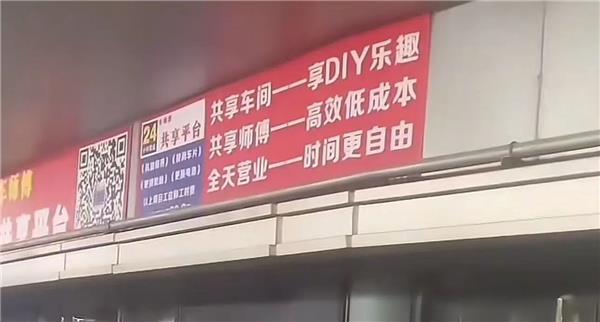
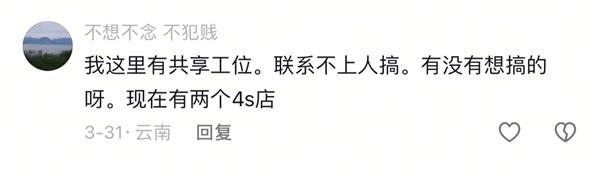
It is reported that the technicians who usually rent workstations are either experienced masters who have previously opened shops or worked in auto repair shops or 4S stores, with excellent skills and a fixed group of old customers. It's a pity to lose it, but it can't support the operation of the store. Renting an auto repair workstation is very suitable. This is basically done by large auto repair shops, dividing thousands of square meters of space into car washing areas, sheet metal spraying areas, maintenance areas, etc., and further dividing multiple independent workstations in each area with clear division of labor; The second floor is used as an office, parts warehouse, or customer rest area. The boss collects workstation rent and provides supporting services such as machinery and equipment, water and electricity, store qualifications, and supply chain. That is to say, auto repair shops have shifted from renting, caring for, and maintaining customers to the "offline sharing platform" model, with stronger risk resistance capabilities. In addition, 4S stores are also renting workstations to the public. For example, a Volkswagen 4S dealership in Guangxi rented two workstations from the repair shop to Hyundai and two workstations to Ideal. According to AC Motors, Tesla adopts the practice of renting repair shop workstations in the sinking market, with a monthly rent of 1000 yuan. Depending on the number of appointments, two technicians can be dispatched to serve the mechanical and electrical maintenance of 10 vehicles; If there is an accident car, it will be taken to a direct operated store in the city. And this is not an isolated case. A 4S dealership owner is looking for a customer in the video comment section: they currently have two 4S dealerships and shared workstations, and they want to contact someone to handle it.
It is not difficult to see that although the "sharing of auto repair workstations" model is not complicated, it is not a simple "one size fits all" rental, but has obvious differences.
02. Four different sharing modes
It can be said that the "shared auto repair workstations" model has existed for more than a decade, but it has never been implemented. Now, it has been forced to pick it up again by the cold winter of the industry. After sorting it out, the workstation sharing models that have emerged since 2018 can be roughly divided into four types, regardless of success or failure. The direction of exploration itself is worthy of recognition. The first type is flexible rental for individual stores, which is the most common and down-to-earth. Zhengzhou has a car service store that opens 3 workstations after 5pm and even provides free technical guidance; A certain auto repair shop in Chengdu rents out machine repair workstations at a rate of 20 yuan per hour, which is suitable for simple maintenance. This type of small and medium-sized auto service store opens up idle workstations, with low barriers to entry and high flexibility, but limited income, and is more of a "subsidy for family use". The second approach is to use a platform based sharing platform to connect idle workstations with demanders and achieve optimized resource allocation. One is heavy asset investment, such as the operation model of Henan Speed Maintenance Insurance, which focuses on recruiting technicians and sharing 600 workstations. Investors invest in building fixed assets such as factories and lifting equipment, sharing workstations with maintenance technicians, and charging fixed asset usage fees according to a certain model. But with an investment of over a million, the trial run failed in less than a month. For example, the honeycomb car suit that emerged later had 75 lifting stations and 186 main stations, claiming to be the "largest maintenance factory store in Asia". The gameplay is similar to quick maintenance, and the workstations also need to be shared; Car owners who bring their own engine oil will only be charged 50 yuan for working hours, etc. However, the service offerings are more diversified, and there are speculations that it does not earn money from technicians and customers, but rather from upstream brands and membership fees. The second is centered around light asset matching, such as the Yi Xiu Bang sharing platform, which serves as a chain brand for auto repair without self operated repair stations. It connects idle stations with entrepreneurial technicians, helping auto repair shops activate idle stations while also providing low-cost entrepreneurial opportunities for teachers. The third approach is to integrate and bring down the 4S stores with the strongest "original factory attributes" to lower their utilization rates. For example, Niujia Si in Beijing has a shared logic of integrating about 4000 idle workstations in Beijing, guiding its customers to nearby 4S stores, and dispatching technicians to provide parts, repair plans, and service standards, allowing mid-range brand 4S stores to upgrade and repair BBA luxury cars. The fourth type is the policy driven shared center model for sheet metal spraying, which is difficult to profit from. For example, the Anyang Yixin Sheet Metal Spray Center, which covers an area of 30000 square meters and has a daily maintenance volume of 200 units, shares sheet metal spray workstations with repair shops. However, the profit margin is limited, and a stable customer base becomes the key to the success of this sharing model. The "Green Island" Body and Paint Sharing Center in Zhejiang is more pragmatic, with centralized body and paint workshops that not only share spray paint room resources with surrounding small and medium-sized auto repair shops, but also pay per use and share usage; And it is also open to technicians, who can start their own businesses with zero cost and just bring customers along. These four types of models may appear to have different forms and varying levels of operation, but their core orientation is highly consistent, which is to prioritize the actual needs of car owners while also taking into account the demands of technicians for light entrepreneurship and small and medium-sized repair shops to make up for their shortcomings. The collapse of quick maintenance and honeycomb car services also indicates that the "shared auto repair workstations" model has fatal flaws, with overly idealized business models, weak profit support, and safety risks that are difficult to solve. Currently, it is still in the stage of "crossing the river by feeling the stones".
03. Survive above all else
Why is the "shared auto repair workstations" model still receiving industry attention despite being validated as a failed model? The answer may no longer focus on the mode itself, but on the drastic changes in the survival environment of the auto repair industry. In the article "The Worst Business Year in Over 10 Years, with Bosses beckoning for Customers! Why is This Year So Difficult?", AC Motors mentioned that in the first four months of this year, it was referred to as the "worst business in history" by auto repair owners. The number of customers entering the store halved, and its performance failed for 10 consecutive days. However, the rent and labor costs were not insignificant, and it lost money every day. This "idle" state has turned the once proud large store scale into a heavy burden that crushes cash flow. Bosses are trying their best to save themselves, and "shared auto repair workstations" have become a natural lifeline. Industry insiders have expressed that "shared auto repair workstations" will not become a trend in the industry, but it will gradually transform the survival strategy of automotive service stores, that is, under the pressure of cost, focusing on small and specialized workstations, and shifting from owning workstations to using workstations. This trend is also quite evident, with 4S stores sinking into the market and renting workstations to start "specialized repair shops"; From small to individual technicians taking orders independently, they rely on one workstation to support themselves. Even auto parts suppliers have changed their ways, no longer spending money on platforms, but placing their warehouses in their own backyard and hiring one or two small workers. Behind all these changes, there is only one theme - to survive. Of course, "shared auto repair workstations" is not a panacea. Responsibility disputes and lack of trust have become hidden concerns for practitioners, but it at least provides an option for auto service stores to "catch their breath" and gives technicians who want to work alone a chance. For the latter, as long as they have a fixed customer base or accident car resources, coupled with stable customer relationships, they no longer need to rely on any brand, and they themselves are the most trustworthy golden signboard in the hearts of old customers. As a store owner said, it's hard to say if you can make money, but first compress the cost to the lowest possible level and don't let yourself fall before dawn.
AMS2024 Exhibition Guide | Comprehensive Exhibition Guide, Don't Miss the Exciting Events Online and Offline
Notice on Holding the Rui'an Promotion Conference for the 2025 China (Rui'an) International Automobile and Motorcycle Parts Exhibition
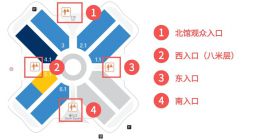
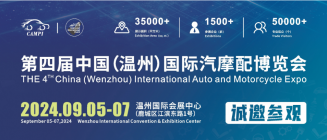
On September 5th, we invite you to join us at the Wenzhou Auto Parts Exhibition on a journey to trace the origin of the Auto Parts City, as per the invitation from the purchaser!
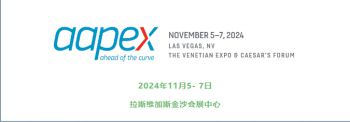
Hot Booking | AAPEX 2024- Professional Exhibition Channel for Entering the North American Auto Parts Market
The wind is just right, Qianchuan Hui! Looking forward to working with you at the 2024 Wenzhou Auto Parts Exhibition and composing a new chapter!
Live up to Shaohua | Wenzhou Auto Parts Exhibition, these wonderful moments are worth remembering!
Free support line!
Email Support!
Working Days/Hours!



Copyright © 2018, PKT Auto Parts All Rights Reserved
浙ICP备18033565号-1
 浙公网安备33038102332475号