English
 Chinese
Scan QRCode

I don't know if you have noticed this issue. The penetration rate, sales volume, and new cars in China's new energy vehicle market are all continuously increasing, but such excitement always gathers among these few brands. Why is it difficult for over 80% of car brands to make it onto the list despite having new energy products? The problem actually lies in the dilemma of 'oil and electricity not being separated'. For example, we are familiar with new energy brand representatives of emerging car companies and traditional car companies undergoing transformation, such as Zero Run, Ideal, NIO, Xiaopeng, Xiaomi, as well as BYD, Geely Galaxy, Lantu, Shenlan, etc. These can be considered pure new energy brands. More brands are still traditional brands that retain the spectrum of fuel vehicle products while shouting for the transition to electrification, such as MG, Haval, Hongqi, Xingtu, etc., which are not pure new energy brands. This kind of brand that requires both needs and needs often lacks market and public opinion when discussing new energy.
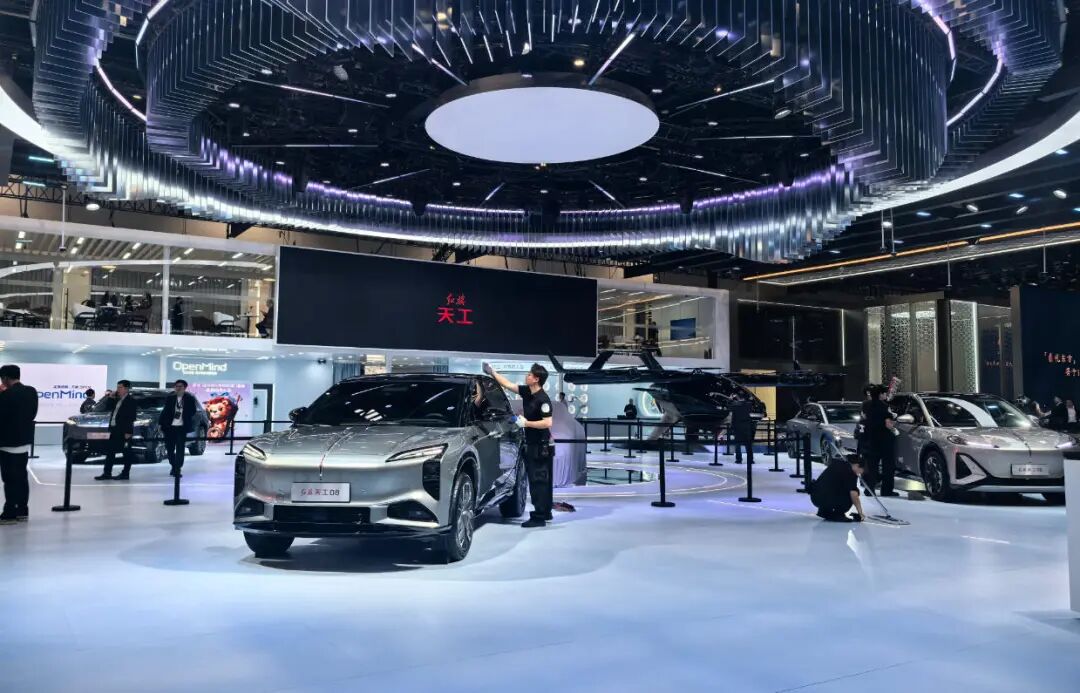
This actually leads to a fundamental transformation in consumer perception as we enter the era of new energy. Young consumers are gradually losing their charm towards large and comprehensive traditional brands, preferring to choose single integrated new brands that only sell new energy to obtain cutting-edge intelligent experiences. In other words, consumers who buy new energy products now have naturally entrusted their innovative, technological, cutting-edge, and electrified minds to pure new energy vehicles with zero load and no burden. The electric models that are placed side by side with old gasoline cars in traditional 4S stores have lost the battle of minds at the source.
01 Natural cognitive disadvantage
Based on this, this article also compiled a sales table for brands that sell both gasoline and new energy vehicles. You can compare that these brands' gasoline car products are inherently unpopular, and when launching new energy products, consumers cannot immediately think of these brands. In fact, previous reports have pointed out that up to 42% of young consumers prefer new brands that only produce new energy vehicles when purchasing them; 29% choose traditional independent brands; Only a mere 5% of young consumers would choose new energy vehicles from joint venture brands. That is to say, in the field of electrification, pure "expert brands" have overwhelming discourse power.
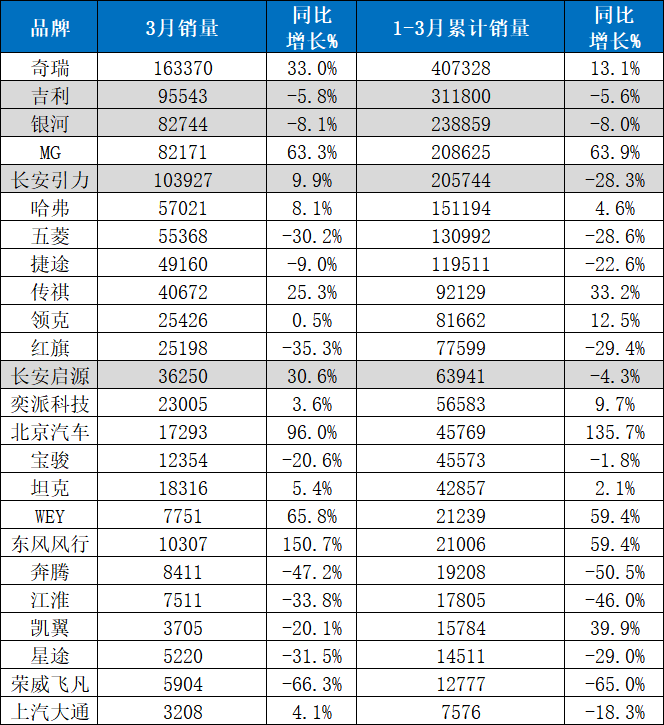
Why has balancing oil and electricity become a reduced item? The core is that there is a feeling of category ambiguity in consumers' minds. When a new energy vehicle model is placed in the same showroom as a row of gasoline cars of the same brand, consumers will experience huge cognitive confusion. Is this brand making internal combustion engines or smart electric vehicles? Can they both do it at the same time? That's why in the past few years, when people talk about joint venture brand electric vehicles, they think of miscellaneous electric vehicles as the same. This difficult dilemma is also applicable to local old brands that have been operating in the fuel vehicle market for a long time. Of course, today's joint venture brand electric vehicles also have the strength to compete with Chinese brand electric vehicles. For example, MG brand on the list, its best-selling model is the pure electric MG4, with an average monthly sales of over 10000 in the past six months. But in fact, MG sells three new energy vehicles in China, the other two being ES5 and Cyberster. The remaining three models are petrol cars, namely MG5/6/7. So, do you still remember these 5 models that didn't sell much? Let's talk about Wuling, which is more familiar to everyone. Among them, MINIEV and Binguo series are the best-selling. But there is a number that needs to be clarified. Currently, Wuling has 27 models on sale with sales statistics, covering multiple power forms such as pure electric, plug-in hybrid, and fuel. So, how do 560/730, Hongguang, and Xingguang sell?
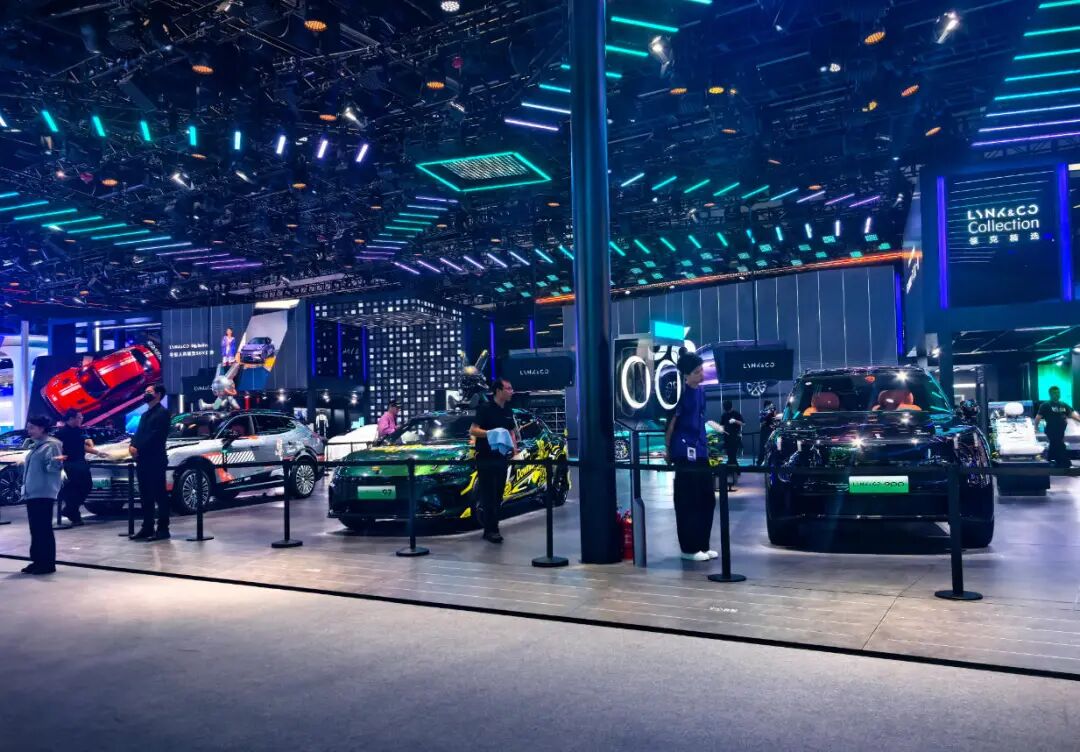
In fact, there are quite a few brands like this. If you have watched or paid attention to this year's Beijing Auto Show, it is not difficult to find that there are too many brand booths filled with both gasoline and green cars. Haval, Jetour, GAC Motor, Lynk&Co, Hongqi, Tank, and Wei brand are all like this. From the sales data, it can also be seen that many brands that balance oil and electricity are prone to a situation of high opening and low decline, and weaker sales. This is actually the fatigue of the oil and electricity hybrid sales model in the market's turbulent stage. When intelligence and electrification become the core of young people's car purchasing decisions, hybrid models simply cannot pass the screening of the younger generation who not only look at parameters but also focus on multiple layers. We have to mention the Geely Galaxy. Through oil electric stripping and rapid product launch, the Geely Galaxy and Geely Star series of fuel vehicles have been well cut. This provides consumers with a good cognitive differentiation, solving the confusion of where to buy a car and whether to go to this brand from the source. At the critical point where new energy has shifted from being a novice to a mass market consumer, hybrid brands cannot gracefully exit the gasoline car race, nor can they regain recognition of their original identity in the new energy race. They have been hit by the dimensionality reduction of pure electric new forces at every process node, and their sluggish sales are the most painful survival truth of new energy in the second half.
02 Frontline channels have bigger problems
Of course, many people will ask after reading the chart, why did Geely Galaxy pave the way while Changan Qiyuan and Chery Fengyun are still struggling? In fact, the reason why Geely Galaxy is able to surpass Changan Qiyuan and Chery Fengyun is not due to a single factor, but rather to a set of interconnected systems. The essence of this system is to rebuild a brand, and in addition to the planning strategy at the level of the car company, the first-line dealer channel is also an important factor. Because distributors are the key to facing consumers directly, their subjective initiative or enthusiasm determines whether consumers recognize the brand.
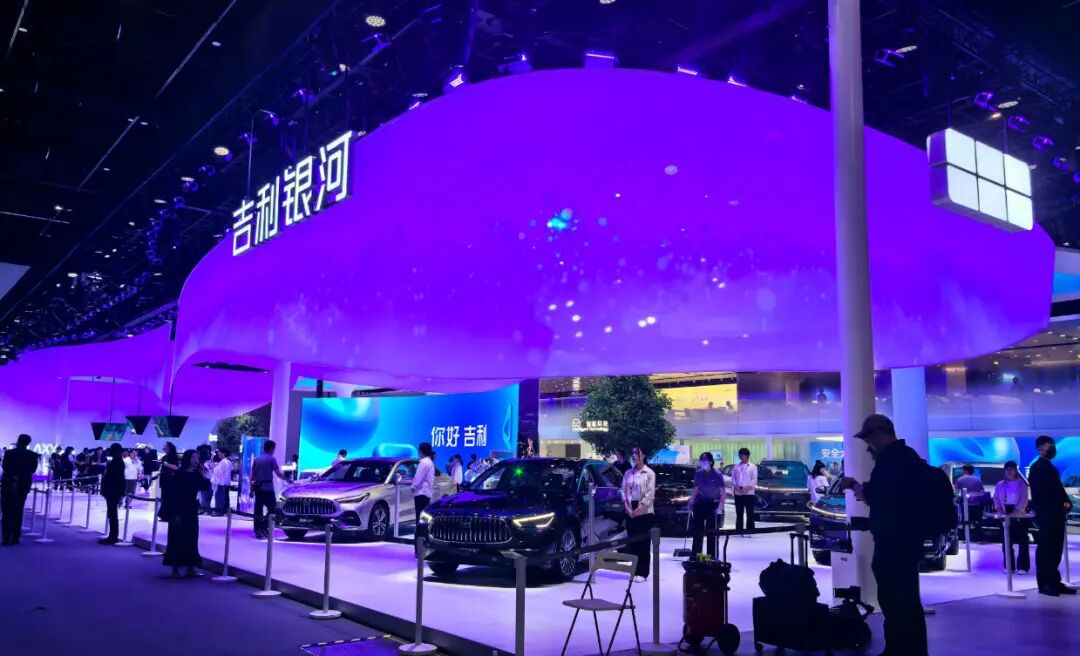
The distribution system relied upon by traditional car companies built a highly fortified moat during the golden age of fuel vehicles, but precisely because of this path dependence on the heavily fortified moat, they have fallen into a game of oil and electricity in the process of transitioning to new energy. Essentially, it is the ability of distributors on one hand, and the profitability of distributors on the other. A survey shows that among car dealers, the initiative of selling electric vehicles in the same 4S store is far less than that of selling traditional fuel vehicles of the same brand. The reason is extremely simple, the profit difference is huge. Traditional brand dealers have bluntly stated that "especially if the brand's fuel vehicles themselves do not sell well, it is more likely to have a negative impact on the sales of electric vehicles." For the vast majority of dealers who prioritize profit, the maintenance packages, expensive parts, financial rebates, and long-term repair profits included in selling a fuel vehicle are simply not available for electric models. Electric vehicles almost do not require oil change, spark plug change, or gearbox oil change. Most batteries come with an eight or ten year warranty, and dealers have little profit margin in after-sales service. In this business model, the traditional 4S stores' expertise in earning after-sales and post sales revenue has become ineffective. The more dealers sell, the deeper losses they may incur due to insufficient revenue from new car sales. The independent brand dealers of new energy have all achieved positive contributions to the gross profit of new cars, after-sales services, and financial insurance, with a gross profit contribution of 16.8% for new cars.
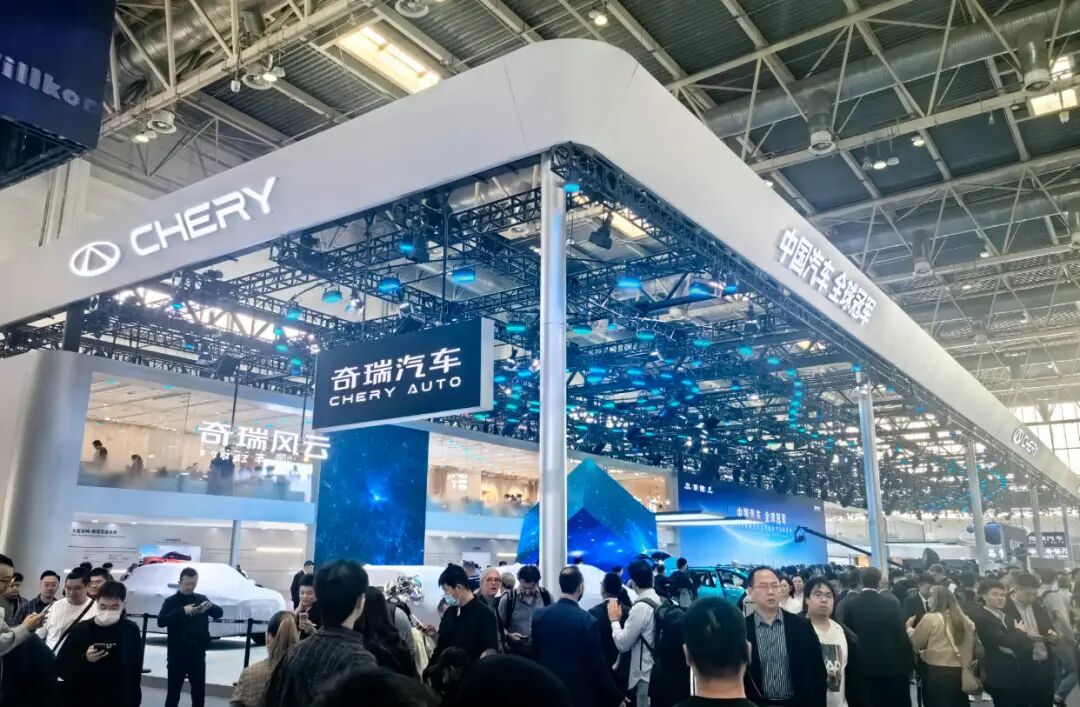
If the profit gap is obvious, then the awareness of dealers is a deeper obstacle. The sales process of traditional distributors is seriously misaligned with the core demands of new energy users. Today's consumers are no longer passive recipients who need guidance from salespeople, but rather solve pain points with specific problems and scenario based experiences. Sales consultants are accustomed to selling prices and parameters, while consumers need a better viewing, purchasing, and driving experience. That's why many traditional dealers struggle to sell well during their transformation. If the awareness and thinking of frontline salespeople do not change, it will be difficult to meet the new demands of consumers. So, we can see that more and more dealers are joining the distribution channels of new pure electric brands with higher visibility across industries. Instead of continuing to endure hardships, it's better to choose to set up a new stove. This means that traditional brands that balance oil and electricity will not undergo a disruptive self channel revolution. They will sink from brand image to escape from distribution networks. When dealers are proficient in selling gasoline cars and earn a lot of money, while selling electric cars is not only difficult but also earns an order of magnitude lower than their counterparts in the new energy direct sales channel, the internal transformation resistance of traditional car companies will naturally increase exponentially. If the dealer channel problem is not solved, even the most advanced new platform and sufficient research and development funds are just castles in the air.
AMS2024 Exhibition Guide | Comprehensive Exhibition Guide, Don't Miss the Exciting Events Online and Offline
Notice on Holding the Rui'an Promotion Conference for the 2025 China (Rui'an) International Automobile and Motorcycle Parts Exhibition
On September 5th, we invite you to join us at the Wenzhou Auto Parts Exhibition on a journey to trace the origin of the Auto Parts City, as per the invitation from the purchaser!
Hot Booking | AAPEX 2024- Professional Exhibition Channel for Entering the North American Auto Parts Market
The wind is just right, Qianchuan Hui! Looking forward to working with you at the 2024 Wenzhou Auto Parts Exhibition and composing a new chapter!
Live up to Shaohua | Wenzhou Auto Parts Exhibition, these wonderful moments are worth remembering!
Free support line!
Email Support!
Working Days/Hours!



Copyright © 2018, PKT Auto Parts All Rights Reserved
浙ICP备18033565号-1
 浙公网安备33038102332475号