English
 Chinese
Scan QRCode

Recognizing the progress of the new energy vehicle market is no longer difficult. Especially after the penetration rate of new energy exceeded 60% in April this year, the domestic new energy vehicle market has entered a new stage. With the acceleration of technological iteration, the diversification of new car categories, and the continuous increase in market sales, the development speed of China's new energy vehicles has continuously shaped the new consumption pattern of domestic automobiles. However, in the process of the development of new energy vehicles entering the expressway, there are also many phenomena that have attracted people's attention. Especially during the transition from fuel vehicles to new energy vehicles, some users have concerns about car anxiety. To be honest, this anxiety has never stopped, from range issues to safety issues, from motion sickness to charging issues. But now, a new problem has emerged - many tram owners have expressed that the fuel powered cars in their parents' hands can easily "serve" for more than ten years; And my own electric car, which has only been in operation for three or four years, has already become a "vintage car" in the market and is forced to face elimination and renewal. Based on this topic, some media have recently interviewed tram owners, and their experiences are a true reflection of countless tram owners using their cars. Yeah, the Haval H6, Highlander, and Santana of our predecessors have been driven for over 10 years, and their condition and practicality have not really become outdated. On the other hand, many electric cars still have strong hardware and three-point systems, but the computing power of the car's chips is not enough to match the latest intelligent system iteration updates, and the intelligent experience is outdated, so we have to consider changing cars.

What's even more frustrating is that electric cars that are three or four years old have already been classified as old models, with significantly reduced residual value. Even if they are only driven for less than a year, their prices have to be halved. In contrast, the completely different car changing experiences of the two generations have revealed the logical differences in car manufacturing between the era of fuel vehicles and new energy vehicles. As is well known, the average replacement cycle for traditional fuel vehicles is maintained at 6 to 8 years, which is a durable fixed asset for households; However, the replacement cycle of electric vehicles is only 3 to 5 years, and the durability of the products has significantly weakened. To put it simply, it's not that the quality of electric cars is inferior to earlier gasoline cars, but rather the new rules of car manufacturing in the era of intelligent electric vehicles, which have caused anxiety among consumers from the perspective of shortening the life cycle of cars.
01The logic of car manufacturing is approaching electronic products
Looking back at the era of fuel vehicles, the product iteration pace of the entire industry is very stable, suitable for the needs of ordinary families. At that time, the industry generally followed the rhythm of "small facelifts in about 3 years, major upgrades in 5-7 years", which allowed the complete product life cycle of a fuel powered car to reach seven or eight years, and some classic models could even deeply cultivate the market for ten years. A longer iteration cycle provides car companies with enough time to polish their products, continuously optimizing core hardware such as powertrain, chassis tuning, and vehicle quality control, allowing the performance and stability of each product to mature. At the same time, the long-term product layout also allows car companies to fully share core costs such as research and development, production line construction, and supply chain support, with a stable and controllable operating pace. For consumers, cars are bulk consumer products that often cost tens or hundreds of thousands of yuan, and are tangible household assets. The six or seven year replacement cycle can fully dilute the cost of purchasing a car, which is in line with the public's consumption ability and long-term car needs. Therefore, the supply-demand relationship in the car market at that time was balanced and benign.

As we enter the era of electrification, the domestic new energy track is slowly entering a high-intensity internal competition, and the speed and logic of industry iteration have overturned tradition. Under the new iteration rhythm, it seems that the host manufacturers are simply copying the rapid update mode of the mobile phone digital circle, compressing the iteration rhythm of the past few years into "one update per year, one major change per two years". Based on this background, there are constantly emerging new models, annual facelifts, customized models, etc. on the market, and configurations such as range, chip computing power, intelligent cockpit, and assisted driving are constantly being renovated In order to compete for traffic, market share, and even generate buzz, car companies have continuously compressed their product iteration cycles and embarked on a crazy race for new releases. But many people overlook that digital products such as cars and mobile phones have completely different consumer attributes. Digital products have low unit prices, low replacement costs, and small sizes. Even if they are replaced every year, they will not bring excessive economic burden to consumers. They are already fast-moving consumer goods with rapid iteration. In contrast, cars are a major asset for families, carrying daily commuting, family travel, long-distance commuting, and other transportation needs. The purchase cost, maintenance cost, and replacement cost are relatively higher. The car usage cycle of ordinary household users is generally over five or six years, and they are simply unable to keep up with the high-frequency iteration rhythm of car companies to continuously pursue new products and frequently change cars. And this iteration speed that deviates from the real usage scenarios of users has triggered a chain reaction in the industry, market, and consumer end, not only causing users to fall into anxiety and even distrust, but even providing intuitive evidence for transactions in the second-hand car market.

By December 2025, the proportion of second-hand car transactions in China with a car age of less than 3 years will be close to 30%, and the proportion of second-hand car transactions with a car age of 3 to 6 years will approach 50%. The combined proportion of these two types of car models will exceed 70%, firmly ranking as the main force in the second-hand car market transactions. Behind this set of data is the rapid influx of a massive number of quasi new new energy vehicles into the second-hand market, which confirms the industry's current situation of "short-lived" electric vehicles. The joke made by netizens about the "annual abandoned pure electric vehicle" is not an exaggerated internet meme, but a true portrayal of the current new energy consumption market. Unlike gasoline powered cars that only replace due to hardware aging and increased malfunctions, the four-year elimination of electric cars is not due to hardware wear and tear, but rather a lag in software iteration. Many times, the hardware conditions of electric vehicles such as motors and chassis are intact, but the computing power of the vehicle's chips is insufficient, the intelligent system stops updating, and new functions cannot be adapted, directly leading to a complete disconnection of the vehicle's intelligent experience from the current market. This typical "hardware not aging, software first declining" characteristic destroys the durability of cars and turns electric cars into rapidly iterating electronic fast-moving consumer goods.
This iterative race, while driving industry technological innovation and product upgrades, has also created a three loss dilemma for consumers, car companies, and even the entire industry, with no real beneficiaries. Not only are consumers facing new concerns, but also car companies forced to accelerate iteration in the fiercely competitive market are under unprecedented business pressure. NIO Chairman Li Bin once said: In the era of fuel vehicles, there is an iteration every five to seven years, and the long product cycle can fully share the costs of research and development, production lines, and supply chains. The operating pressure of car companies is smooth and controllable. In the era of intelligent electric vehicles, the iteration speed is growing exponentially, and the product lifecycle is significantly shortened. Each car model has high costs from early R&D investment to production line mold opening, from supply chain adaptation to quality control construction, etc. It must be quickly recovered within a very short iteration cycle. Once the product updates lag behind and the configuration cannot keep up with the market pace, it will be quickly overwhelmed and eliminated by new products.

Because behind the high-frequency adoption of new products and forced iteration, there are continuously rising research and development costs, frequent switching of production lines, and a large amount of idle production capacity resources for car companies. The waste of resources caused by ineffective internal competition can easily reach hundreds of millions of yuan, and many car companies are trapped in the dilemma of difficult profitability and pressure from iteration. The industry is gradually falling into a vicious cycle of short-lived popularity of new cars and declining iteration efficiency. Of course, the ultimate cost of internal competition among car companies is mostly passed on to consumers, causing a crisis of trust among users and becoming a major hidden danger to the development of the industry. Changan Automobile Chairman Zhu Huarong has publicly stated that behind the rapid development of the domestic new energy vehicle industry, there are many chaos that urgently need to be solved. Some brand products are frequently updated and iterated, but they give up continuous optimization and upgrading of old models, seriously damaging the user experience and legitimate rights and interests. The chaos is also intuitively reflected in consumer complaint data. In the first 11 months of 2025, the number of disputes and complaints related to the iteration of new and old car models in China reached 39300, nearly 82 times higher than the same period in 2024, reflecting consumer dissatisfaction and resistance. As of now, several typical cases in the market have sparked discussions across the internet, with the launch of the new model Jike 001 just five months after its launch; The Wenjie M7 completed its iterative redesign within 8 months of its launch Under rapid iteration, old car owners have become outdated as soon as they receive a new car, resulting in a cliff like decline in vehicle resale value. Many car owners have openly stated that they have been "backstabbed" by the brand, causing significant damage to brand reputation and user stickiness.

For old car owners, the rapid iteration of car companies has led to the rapid depreciation and outdated configuration of vehicles in good condition, resulting in significant economic losses and psychological disparities despite having no quality issues; For potential car buyers, the chaotic iteration pace and frequent updates of new models have left them in a wait-and-see and numb state, afraid to easily purchase new cars, fearing that "picking up the car will make it outdated, buying the car will depreciate". From the perspective of the industry as a whole, this ineffective internal competition that deviates from user needs may seem to drive rapid technological updates, but in reality, it overdraws the industry's reputation, drags down car companies' profits, and hurts consumer confidence. After all, the core competitiveness of the new energy vehicle industry has never been iteration speed and frequency of updates, but rather product quality, stable experience, reliable user reputation, and comprehensive after-sales support. That is to say, car companies need to give up blind and ineffective internal competition, return to the origin of car manufacturing, focus on the real and long-term needs of ordinary families, stabilize the pace of product iteration, and take into account the rights and interests of new and old users. Only in this way can we end the industry's three lose situation and promote the high-quality development of the new energy vehicle industry. At that time, we will acknowledge another advancement in the new energy vehicle market.
AMS2024 Exhibition Guide | Comprehensive Exhibition Guide, Don't Miss the Exciting Events Online and Offline
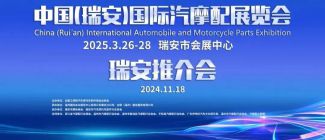
Notice on Holding the Rui'an Promotion Conference for the 2025 China (Rui'an) International Automobile and Motorcycle Parts Exhibition
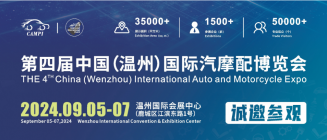
On September 5th, we invite you to join us at the Wenzhou Auto Parts Exhibition on a journey to trace the origin of the Auto Parts City, as per the invitation from the purchaser!
Hot Booking | AAPEX 2024- Professional Exhibition Channel for Entering the North American Auto Parts Market
The wind is just right, Qianchuan Hui! Looking forward to working with you at the 2024 Wenzhou Auto Parts Exhibition and composing a new chapter!
Live up to Shaohua | Wenzhou Auto Parts Exhibition, these wonderful moments are worth remembering!
Free support line!
Email Support!
Working Days/Hours!



Copyright © 2018, PKT Auto Parts All Rights Reserved
浙ICP备18033565号-1
 浙公网安备33038102332475号